

So, what you’re saying is: summer’s over.
It’s still 30°C outside, but officially – yeah – it’s done. I meant to write a couple of posts over the summer and during vacation, but here’s what actually happened: one day I stared at the sea for five straight hours. It was an emergency brain detox. Empty the mind, watch the line where sea meets the sky. Poetic, I know.
Then came the return to work – you know the drill. Colleagues who missed you have lovingly saved a pile of tasks with your name on it, and you’re slammed back into reality. That carried on for a couple of weeks. Now that it’s finally below 30°C, my brain has rejoined the party, and I’m not sweating through every pore of my body (including my eyelashes). Which means: time to write again.
I wasn’t exactly slacking, though. Not sure it’s something one boasts about, but I’m proud of it: I built new planners – money management, personal motivation trackers, and project planners.
If you’re anything like me, you’re basically a cat. Or a puppy. You’re doing your thing, a leaf drifts down, and – oh my god, a leaf – you spend 30 minutes observing leaf-related… whatever. “Stuff” is such a great word when you need to bundle unrelated nonsense into one neat label. Anyway – distracted. Point proven. Which is why I need deeply personalized planners and trackers – not to bury myself in unfinished tasks, but to keep sight of what matters and where I left off before the detour.
Here’s how I’m using my personal activity tracker – what it is, how it’s going, and what I expect from it. Obvious note, but I’ll say it: this is v1. I don’t know if it’ll work, but I put real thought into it and I think it fits me. I’m notoriously bad at keeping notes. (Why do you think I want a blog? Maybe it’ll help.)
First, the rules:
– The tracker lists activities across Monday to Friday.
– Weekends are out – some are packed, some are strictly for reanimation. Energy-dependent.
– A checkmark requires at least 15 minutes of actual doing.
– Realistic aim: two checkmarks per day.
– Weekly aim: at least three days with anything checked.
– Excluded because they’re non-negotiable life stuff: cleaning, cooking, shopping, taking out the trash. Want to eat and save money? Cook something, 4head.
Why this structure? Throughout my life I’ve noticed a pattern. I’ll be obsessed with drawing for a couple of months… then the spark vanishes and photography takes over. Then that fades, something else shines, and photography slides into the backlog. But none of it is gone forever. A month, a year or two later, the interest returns, I do a quick recap, and pick up the thread.
So I made a list of my long-running interests: learning new software, writing, drawing, photography, coding, vlogging, editing, blogging. (As I’m typing this I realize I forgot the “handmade” crafts I dip into – but I digress.) I set up spreadsheets and a weekly planner with a tiny checkbox for each activity. Printed it, taped it into a notebook, and every morning over coffee I tick what I did the day before.
I also want more movement – some exercise, and to lose a bit of weight. Sitting at a computer all day isn’t ideal. I joke that when something heavy needs lifting, I’ve got “programmer hands.” Questionable biceps. So fitness goes in the tracker too.
With 15 items and a 15-minute rule, only one or two boxes per day is realistic. I get how a long list with few ticks can feel demotivating. But that’s not the point.
The point is visibility. If I spent last week learning Fusion 360, great – but I can also see I didn’t go for a single walk because I was glued to the screen. That’s my cue to nudge myself out the door, loop the neighborhood, hit the park, get the blood moving.
I’m also curious how long each interest actually sticks around. Maybe it’s not “a couple of months.” Maybe it’s ten days. Like sleep tracking: once you measure it – with a watch or band – you finally understand what you need to feel human. If you haven’t tried it, I HIGHLY recommend it.
So that’s the goal and the expectation. How’s it going? Errr… still building the habit. It’s a 15-second task: open the notebook, recall yesterday, add a couple of checkmarks. Done. Log the data.
For the first months it’s mostly about recording. After that, once patterns appear, I can start shaping my behavior. Maybe I only walk on Mondays and Tuesdays – nothing later in the week. I’m a big believer in “tricking your brain” with small novelty. You take the same goddamn route to work every day? Spend 50 seconds and take the detour. See what’s happening on those other streets. It’s new; your brain complains because it’s not the safe autopilot path, but once you’re there it’s interesting. New faces, different rhythm. So yeah – skip the Monday/Tuesday park walk and do it on Thursday. Break the loop. Trick your brain. Change locations. Stop watching tutorials and actually do the damn thing.
Shit like that.
That’s the gist. Hope it was a fun read – and maybe a nudge to start your own tracker, ignore the noise, and just do the thing.
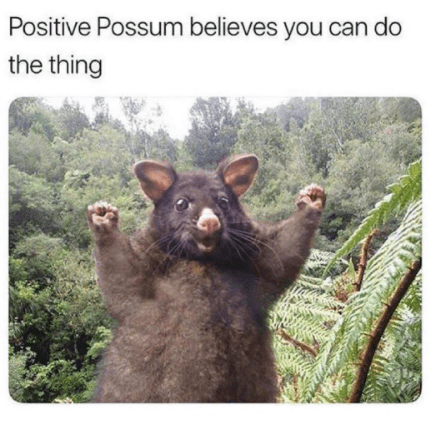
Stay safe out there.
Commodore Bo, out.



 Commodore Bo
Leave a comment